Morning Coffee: The ex-Goldman Sachs executive with the unluckiest childhood and luckiest life. Jane Fraser’s proudest ping-pong victory
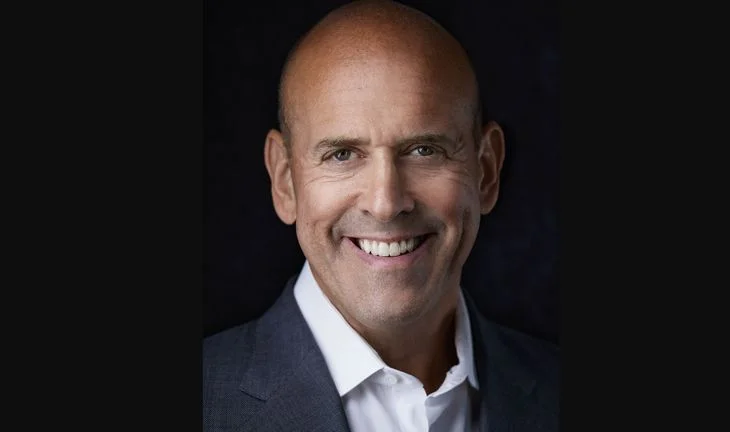
It’s been known for a while that Harvey Schwartz, the CEO of Carlyle Group, had an extremely difficult childhood, due to his parents’ severe mental illnesses. In an interview with Sonali Basak of Bloomberg, however, he sets out exactly how difficult, and it’s an absolutely shocking story that’s well worth listening to.
Get Morning Coffee ☕ in your inbox. Sign up here.
As well as making other senior bankers’ tales of growing up at slightly less than the median income look frankly idyllic, Schwartz’s interview is a story of what must have been extraordinary resilience. His mother died when he was 14; his father thought he could communicate subliminally and rarely spoke. Both made multiple suicide attempts, and as a child Schwartz lived from their "hospitalization to hospitalization." At one point, he realised that he has missed so much school he has no chance of graduating, and so he relocated from New Jersey to California, staying with the family of a friend and trading a report card covered with F’s for a new start and straight A’s.
It’s also clear, reading between the lines, that Schwartz has always been someone that people want to help and support, including a Rutgers alumni at his gym who went to war on his behalf with the admissions department. (You can tell that there’s a little bit of needle in the interview about the fact that Rutgers is kind of borderline when it comes to Goldman Sachs campus recruitment; Schwartz is very clear that he doesn’t judge people by where they went to university, although he did also do an MBA at Columbia).
After subsequent career missteps, including a construction company that failed and a job at a lower tier bond broker where his first day was the October 1987 Great Crash, he ended up in the back office of Citi, did his MBA, joined the commodities business at Goldman Sachs, and thankfully, seems to have found there that he had used up a lifetime’s supply of bad luck in his first 25 years. After an extremely successful career at Goldman, moving from job to job and ending up as a strongly-fancied CEO candidate, he instead went to the buy side and joined Carlyle just in time for the private equity explosion, and the related compensation boom.
Never has it been so accurate to say that “bad times make good people”. Schwartz does actually attribute a lot of his success to the “real feeling of sequential failure as a young person” which made it difficult for him to regard any future success as likely to last. In his words, “one of my core competencies was insecurity”. It’s probably unlikely that there are many lessons for other people to learn from such a unique story, except perhaps that it’s worth taking an interest in colleagues with an unconventional background, because they might have done some extraordinary things.
Elsewhere, Citigroup CEO Jane Fraser is the Banker Of The Year for 2025, in recognition of having delivered on Project Bora Bora, turned the stock price around and rebuilt the investment banking franchise to the extent that it’s finally showing market share gains. In typical style, she seems to have ensured that the citation for her award is full of credit to other people in her top management team. These include Titi Cole’s work on selling international subsidiaries, Andy Sieg’s restructuring of the wealth management business, and the tech team’s progress in closing down and retiring of legacy IT applications. (That’s an Anand Selvaskari area of responsibility, although the profile appears to make a bigger deal about the hiring of Tim Ryan).
But some of the biggest plaudits are reserved for Vis Raghavan and the investment banking turnaround. Vis has even been allowed to install some co-heads where he deems it necessary, which is otherwise an absolute no-no under Project Bora Bora. Jane Fraser appears to be keen to emphasize that despite initial worries, the changes in the top ranks of dealmakers haven’t led to management friction; she says that one her greatest moments of satisfaction was seeing Raghavan and the head of markets, Andrew Morton, playing as table tennis partners at a recent management offsite.
The proverb that “There is no limit to what someone can do if they don’t mind who gets the credit” is one of those sayings variously attributed to Harry Truman, Ronald Reagan and every folksy wise person you can think of. But it seems that Jane Fraser believes in it too.
Meanwhile …
Pleasing symmetry at UBS FIG, which has hired two co-heads in the USA (Eric Martinez from RBC and Simon Thiel from BoA), and promoted two co-heads internally in EMEA (Annalisa Terracina and Benjamin Crystal). Above these two sets of regional co-heads sit the global co-heads, Stefanos Papapanagiotou and Vik Hebatpuria. Every head has a co. (Global Capital)
“I had no idea he was an investor until very recently. I could not believe it. I thought this has to be a podcaster of some sort”. Sequoia’s Shaun Maguire has supporters and detractors for his politically outspoken social media, but that is a really vicious burn. (Business Insider)
DWS is opening an Abu Dhabi office, and several staff have already said that they might consider swapping the Frankfurt summer head for the UAE all-year round heat, and presumably also the tax regimes. (Financial News)
As sentences are handed down in the SMBC Nikko block trades scandal, a horrible reminder of the human cost of these things; one banker died of a brain aneurysm during the investigation, after questioning sessions which lasted ten hours. (FT)
In the world of hedge funds, raising a load of money is a good flex, but the biggest flex is closing your doors to new money. It says that you’ve got all you need, it demonstrates that you’re a sensible custodian of capital, and it makes your clients scared to redeem or complain about fees in case they never get back in. The latest multistrat to ascend to this plane is Walleye Capital, which is also celebrating hiring Jared Hade from Balyasny as its CFO. (Bloomberg)
Think of all the things Ed Byers has seen, in the 36 years between joining Cazenove in 1989 and retiring this week from JPMorgan Cazenove, where he was vice chair of EMEA investment banking. Mainly Powerpoint slides, admittedly, but also a lot of more interesting things. (Financial News)
Have a confidential story, tip, or comment you’d like to share? Contact: +44 7537 182250 (SMS, Whatsapp or voicemail). Telegram: @SarahButcher. Signal: sarahbutcher.22 Click here to fill in our anonymous form, or email editortips@efinancialcareers.com.
Bear with us if you leave a comment at the bottom of this article: all our comments are moderated by human beings. Sometimes these humans might be asleep, or away from their desks, so it may take a while for your comment to appear. Eventually it will – unless it’s offensive or libellous (in which case it won’t.)