The tragic tale of a top equity researcher spending £28k a month just to stay alive
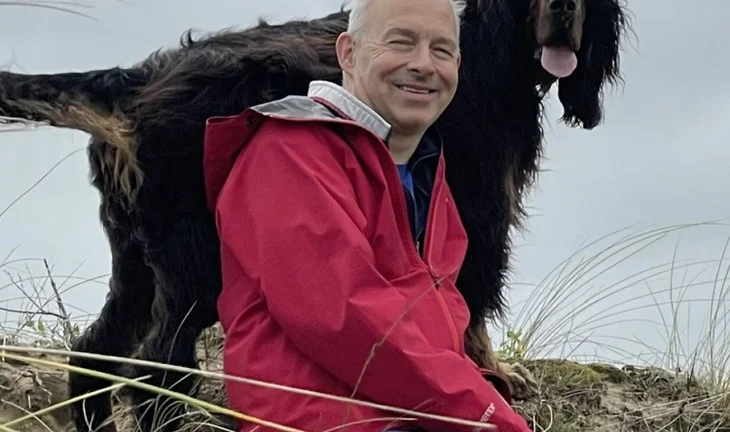
The last time we wrote about Richard Kersley, it was September 2023. Credit Suisse had collapsed and Kersley, who'd worked at the bank for 37 years, latterly as head of research product management, was rumoured to be joining UBS.
He never arrived. Instead of joining UBS, Kersley chose to avail himself of the large pension he'd amassed since 1986. He retired. "It was supposed to be family time," says his wife. "When Richard was working, he was up at 5.30am and dealing with calls in the evenings and at weekends."
For the first 12 months, 60-year-old Kersley had the retirement he'd envisaged. A year ago, he said his intention was to, "learn a language, learn to cook and learn to dance!" In March '25, he posted on LinkedIn that he was ready to volunteer. And then in April '25, everything changed.
During a breakfast with his wife at Goodwood, Kersley blacked out. "We were on our way to walk the dog at the beach," his wife explains. "We never got there."
Instead, Kersley was driven by ambulance to nearby Chichester Hospital. There, tests concluded that he wasn't in immediate danger, but that further investigations were urgently needed. His wife drove him home to London, and the next morning they went to A&E at Chelsea and Westminster Hospital. There, Kersley was told he has Glioblastoma Multiforma (GBM), a brain tumour that kills most sufferers within a year and 95% of sufferers within five years. "He had no symptoms," says his wife. "But that's normal. The blackout is how you find out."
The prognosis wasn't the only thing, though. Treatment for GBM has traditionally involved surgery, radiotherapy and chemotherapy. In recent years, though, oncologists have also begun treating GBM patients with immunotherapy drugs, with monoclonal antibodies and with an external device called Optune Gio which creates "Tumor Treating Fields" through patches placed on the head. This new combination can increase the five-year survival rate from 5% to 13%.
Kersley is paying for the new treatments himself, and they are not cheap. Optune Gio alone costs £20k ($27k) a month for patients in the UK. The immunotherapy drug is another £8.7k every three weeks. Most UK sufferers raise money for their treatment via GoFundMe pages, but Kersley is funding himself from the money he saved in his Credit Suisse pension. "I don’t feel comfortable asking for money and nor does Richard," says his wife. "He's had a successful career, and we don’t feel we should be asking people."
What the Kersleys do think, though, is that his health insurer, AXA, should cover the cost of his treatment. Instead, the small print of his health insurance says AXA doesn't cover "external devices" and that it "will only fund treatments that are widely available across the UK." In this way, Kersley says his treatment is limited to what's available through the NHS.
"Richard has not had a single operation or ailment in his life," says his wife. "He's never had to claim for an operation through AXA and the rejection of this claim seems ridiculous. You expect to get the best option on the market with health insurance, but it's just standard care."
The Kersleys are petitioning AXA to change. They're also trying to raise awareness of the limitations to its policies, which they say don't exist when you're insured by rivals like Bupa and Aviva. In a comment for this article, AXA said private medical insurance covers "drugs, treatment and surgery that are ‘conventional treatment,’" and that there is "insufficient evidence" to cover Optune. However, Kersley's wife says the use of the devices is common practice elsewhere. "The UK is one of the few G7 countries that doesn’t use Optune as standard care."
In the face of AXA's refusal to help, the two are left funding the treatments themselves and worrying about a future when Kersley's wife will have to pay for herself and their 13-year-old daughter on her own.
In a bittersweet tangent to the tale, Kersley's troubles have brought him back in touch with former colleagues. "Loads of people that Richard worked with have been in touch," says his wife. "People he hasn't seen or spoken to for 10 years, and we've heard from lovely people at UBS. Some have said they've had similar experiences with AXA.
"Life is tough," she adds. "Knowing you might not have much time left. You know that something is going to hit you sometime, but nothing prepared me for how fast this disease progresses."
Have a confidential story, tip, or comment you’d like to share? Contact: +44 7537 182250 (SMS, Whatsapp or voicemail). Telegram: @SarahButcher. Signal: sarahbutcher.22 Click here to fill in our anonymous form, or email editortips@efinancialcareers.com.
Bear with us if you leave a comment at the bottom of this article: comments are moderated intermittently by human beings. Sometimes these humans might be asleep, or away from their desks, so it may take a while for your comment to appear. You must take sole responsibility for comments you post on this site. We will take reasonable steps to weed out anything that we consider to be offensive or inappropriate.